About This Blog

The public should know all we can about the business of the decision makers that affect our lives, our wallets and our democracy. This is a record of my efforts to try and improve the levels of transparency and accountability within Sheffield City Council and others. To shine a light on how decisions are made and where the money goes. If I can also help others to find their own voice and influence along the way, then that is a bonus.

Showing posts with label Planning. Show all posts

Tuesday, 16 January 2018

Sheffield City Partnership Board Meeting 12th January 2018

This meeting was intended to focus on the current work streams around inclusive growth and to look at the current position of the State of Sheffield Report 2018, currently being written.


There were three presentations during the public session, the first was from the Cohesion Sheffield team looking at their work in the city.

First up for them was Mike Fitter of the Cohesion Advisory Group. He talked about the Cohesion Sheffield aims being 'a city where everyone is treated with dignity and respect.

They are a group that is a co-production between CAG and SCC and some of the early partners involved included, South Yorkshire Police (vis the PCC), University of Sheffield and John Lewis.

They work to two principles; Structural – Based on the fact that cohesion is undermined by deprivation and not diversity. Relational – The idea of the Cohesion Lens – How we all work together.

He also outlined the importance of inclusive growth to the cohesion agenda in the way it brings together social and economic policies. Commented positively on one of my favourite subjects, citizen engagement and community development. Then emphasised the need for local leadership that reflects the current diversity of Sheffield.


Angela Greenwood, Community Services Manager for SCC came next. She talked about how cohesion is about getting on with each other at all levels and about how we maintain cohesion and our ability to intervene when cohesion breaks down.

The benefits of co-production for SCC. Trusted and strong relationships, Innovation and the ability to do so much more as well as access extra funding. £835K from Central Government and £500K from Lottery funding.

Angela also highlighted some challenges; Mistrust of Council & Partners. Constant change of colleagues. Takes longer to achieve things through co-production & Sometimes hard to explain the concept.

The things that SCC were working on were listed as; Cohesion grant fund of £60K over 2 years. Cohesion Charter. Community Investment Deal & Regional & National work.


Finally there was Panni Loh, Development Co-ordinator for Cohesion Sheffield. She outlined the origins and development to date of the group. Based in Voluntary Action Sheffield but working across all sectors. Launched in October 2017, still new. She talked about key activities to date being around Engagement & relationship/trust building. Working with organisations to generate their own Cohesion Action Plans. Lastly there will be a Cohesion Sheffield conference on 21st March 2018 in the Town Hall, all welcome.

There were a number of comments and questions from the Board members around how success would be measured and the scale of the response moving up from individual organisations to a more general cohesion plan.


The next presentation was Simon Ogden of Creative Sheffield, presenting a summary of the Sheffield City Centre Development Plan 2018. This is due for a consultation period in Mid February.

The City Centre Plan is designed to outline a purpose & structure to planning in the city centre. A vision for the next ten years, a clear narrative to everyone, a signal to the market about opportunities in the city, a sales pitch/call to action and a single source of 'truth'

Why City Centre? It's a major driver of the City Region economy, it is key to growth for the city overall, it's a centre for the education sector, it's a meeting point for all the people of the city and it's part of the key to sustainable living.

Some of the key points he highlighted were the move towards a compact and High Quality retail area, three new business districts planned, growing the education campuses, Castlegate development and the better use of roads & public transport. There was a considerable amount more but the presentation was delivered at such a speed as to make it difficult for me to take notes but then, the public is not the audience for this really. That is to wait until the public consultation.

There were a number of projects mentioned that are already underway, either having gained planning approval or indeed being under construction. This rather undermines the idea of a consultation in anything but name only. The plans appear firmly established and the consultation will be a rubber stamp approach I suspect. It is not untypical of the approach of top down design projects, they make the decisions we get to say how much we like it...or not.

I had hoped to hear that real public consultation would be a regular part of the future vision for the city so that the people that live in and use the space can influence the direction it takes. Having a say once every ten years is not good enough in a world where social media can enable regular checks and balances on what planners have in mind.

My final point would be that the heritage economy was mentioned only in passing with respect to Castlegate and it is clear that progress on the steps needed to both safeguard and bring that area back into productive use is painfully slow.


The last presentation was a gallop through the current position on the writing of the State of Sheffield Report 2018 which is due to be published shortly. This was given by Andi Walshaw, Performance & Research Manager for SCC.

He restated the original remit for the report and outlined the agreement as to what would be in this years report. Four sections were identified for detailed reporting. Safety & security, Democracy & engagement, Social and community infrastructure and Health & wellbeing. Each of these would be 2-3000 words with illustrations. More information can be seen in the presentation on the SCPB website.

An initial draft had been circulated to the board for their comments but Andi highlighted some of their thoughts. On the positive, there was plenty of content to work with, there were interesting new topic areas and there had been good engagement with the guest authors.

Improvement was needed in the following areas. Initial content was different to the 'usual' approach of the report, too much opinion and not enough facts, less reference to sources of information than previous years.

There then followed a brief report on the preparations and comms needs for the publication and launch of the report. The comments from the board largely reflected the editor's comments.


Thereafter the meeting wound up. The presentations can be viewed on the SCPB website. The next meeting is Friday 16th March, more details to follow.


Monday, 5 October 2015

Article in Now Then magazine, October 2015, by Nigel Slack.


Just a quick post to record that I have an article in this months Now Then magazine (Issue no.91 October 2015). The article's entitled  'Retail Quarter: Shopping Heaven or Hell?' and is a consideration of the future of the City Centre at this pivotal moment for it's development.

click here to go to Now Then Magazine Article "Retail Quarter: Shopping Heaven or Hell? " by Nigel Slack"

Tuesday, 24 March 2015

Devonshire Street Demolition – Approved.


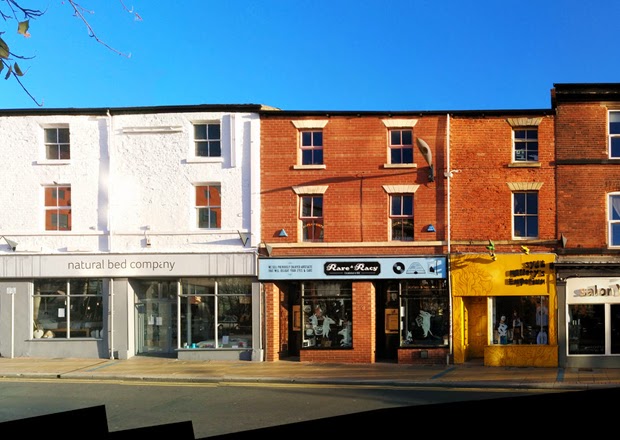
Many people will now be aware that the proposed demolition of numbers 62 – 70 Devonshire Street was approved by the City Council's Planning Committee today. Some will be worried that this is the end of an era for independent shops on Devonshire Street. I hope to show you that this is not necessarily the case.


Round one of the fight is over, round two is about to begin. The heritage groups involved in objecting to this proposal have made it clear that, if they can raise the funds, they will challenge this decision through the full extent of the planning process. This is hugely important because if today has proved one thing it is that there is a hole in the planning provisions of this city that you could drive a coach and horses through.

The way that planning officers today interpreted the provisions of the National Planning Policy Framework (the National laws that govern planning processes) means that developers are now free to do almost anything they want, to any building in Sheffield, heritage asset or not, and the City Council is unlikely to oppose them through fear of litigation. The decision made today about the demolition of Devonshire Street sets a precedent that means almost any protection offered by the NPPF guidelines can be watered down so to prevent developers from threatening to challenge negative decisions.


Today's decision was a matter of balance. The planning officer admitted as much, the Councillors on the committee were made aware of that fact and we, as objectors tried to make it clear to them that this meant they did have a real choice. This was not a matter of the committee being unable to legitimately deny the application, it was a case of whether the committee was prepared to accept the potential of a challenge as the price of doing the right thing. They were not, at least not enough of them were.

The reason that this has arisen lays directly at the door of the City Council. Sheffield last legitimised it's planning guidelines in 1998 when it developed what is termed the Unitary Development Plan. This gave planners and developers details of what was and was not allowed within the city when it came to new development, demolition and other planning issues. This UDP has been amended by various other plans since. Specific plans for different quarters of the city, the city centre living strategy, guidance on the night time economy and others. The main provisions however have never been reviewed. Other overall development plans for the city have been developed and discussed but none have been adopted.


The UDP is now so old that the city's own planning department will no longer rely on it to protect the city or it's heritage from the ravages of profit hungry developers.


It's restrictions and guidelines are considered out of date and therefore almost irrelevant to the planning process. How can we expect planning officers to make the reasonable and robust decisions we need when their guidelines are almost non existent. This needs addressing and addressing soon before even more of the city's heritage is, as one Committee member commented this afternoon, “...slowly nibbled away piece by piece...”. With one notable exception the Labour ranks in the Planning Committee seem ill prepared to stand up for the city and the people that elected them.

Round one is over, round two is just beginning and a whole new battle is looming on the horizon. Is Sheffield up to the challenge?

Wednesday, 18 March 2015

Devonshire Street demolition. How to stop it!


The decision on the demolition of a row of shops considered by many as the jewel in the crown of the Devonshire Quarter's shopping experience and probably the oldest remaining shopping street in Sheffield will be made on Tuesday 24th March 2015, at the Planning Meeting, taking place in the Town Hall, Pinstone Street, S1 1HH at 2pm.

This may well be the last chance to prevent the demolition from going ahead, though with Planning Officers recommending demolition to the Planning Committee this may be a slim chance. I believe it is important that we make our case and try to force a rethink on the Officers and the Committee.

If you feel strongly enough about this and like me think this is unacceptable, get involved, here is what to do.


First, turn up to the Planning Meeting on Tuesday to voice your objection. You need to arrive fifteen minutes before the meeting starts, so at 1.45pm and register your wish to comment with the clerk of the meeting. Anyone affected by an application, whether as a neighbour or other Interested parties, may ask to put views personally.

Have your comments prepared. The more people that speak the longer the meeting will take and the potential that we can stop or change the decision that day. The Chair of the meeting will probably try to prevent too many people from contributing so we will have to be firm that we each have different points to make and we all deserve a chance to speak.

Make sure as much of your comment as possible concentrates on the planning issues rather than just personal preference for the shops that are currently there or concern over chain retailers taking over, they won't consider these comments as relevant. Make it personal however, commenting why you have problems with what they are doing, based on the planning issues.


Here are some comments that might be useful to you;

The Coal Authority report suggests a significant mining legacy risk. This could lead to redevelopment not being an option after demolition and this heritage being permanently lost.

The developer's own archaeological report states. “...overall, the proposed development will have a minor negative impact” and “A proposed sympathetic scheme that would retain the existing building, whilst also developing the land to the rear would be considered as providing a moderate/minor positive impact.”

The Planning Officer's report highlights “ Policy BE15 of the UDP...(says)...Development which would harm the character or appearance of Listed Buildings, Conservation Areas or Areas of Special Character will not be permitted.” (The Grade II listed former Wharncliffe Fireclay Works would be affected.)

and “... policy BE18...expects the retention of buildings, walls, trees, open spaces and other features that contribute to the character of the Area,”

and “Policy BE20 of the UDP (Other Historic Buildings) states that the retention of historic buildings which are of local interest but not listed will be encouraged wherever practicable”

The NPPF (National Planning Policy Framework) advises. “advises that local planning authorities should set out ... a positive strategy for the conservation and enjoyment of the historic environment and, ... recognise that heritage assets are an irreplaceable resource which should be conserved in a manner appropriate to their significance.

The Archaeological report also states. “Numbers 162-170 Devonshire Street have a strong social value, not only for those who continue to work within the buildings, but also within the wider local community. The social value of the application site has been demonstrated by public interest into the development proposal and formal comments registered to the application.”

and “The Appraisal concludes that the proposed development will result in the complete loss of the undesignated heritage asset of local importance...”


These are just a few comments I've picked out from all the reports as relevant to planning policy and therefore a good hook on which to hang your objections. There are others and all the reports can be seen on the Council website's Planning pages.

Start Here
http://publicaccess.sheffield.gov.uk/online-applications/files/0E3B859EE4C653ADD25BA09F6635DB17/14_03473_FUL--872262.rtf

The full set of reports are here.
http://publicaccess.sheffield.gov.uk/online-applications/applicationDetails.do?activeTab=documents&keyVal=NC1WIKNYFY000

If you have the time add some thoughts of your own.

Around 19,500 people have objected to this proposal, in one form or another, if we can get just 1% to turn up at the planning meeting that would be huge. Please try to be there and please try to comment.

Monday, 17 November 2014

Full Council Meeting on 5th November 2014, by Nigel Slack.


The meeting kicked off as usual but this time the public gallery was full. There was a significant contingent of the GMB Union members currently striking against the Green Company, who run the recycling centres in the city as sub-contractors for Veolia, the outsourcing company. In addition there was a petition to be presented about the outsourcing of the Learning Disability Service and with over 5,000 signatures this triggers a debate in council.

Soon enough public petitions and questions came around and there were lots of petitions this time. Subjects were; Devonshire Street shops demolition, Tesco Express planning application in Stannington, Re-instatement of free city centre shuttle bus service, Misuse of Totley Scout Hut, and School crossing patrol at St Anne's Park School.


The meeting then moved on to Public Questions. Again lots of questions from a full public gallery, inevitably meaning I would be towards the end. As a regular there it seems to me that this means the 'new' people get to ask their questions first. This is fine in general terms but sometimes leads to boredom in the cheap seats and those of us at the end of the process are less likely to be able to preface or contextualise our questions, which leads to uncertainty in answers and the liklihood of additional questions being needed at a later date.

Questions were on the subjects of; Protocols of child protection, Employment and economic development, Gritting of Blindside Lane, Questions grouped by the GMB Union members on the strike at Sheffield's waste recycling centres and the management by 'Green Company' on a sub-contract from Veolia, The privatisation of the 'Supported Living Service', Arbourthorne TARA concerns, The Sheffield Federation of TARA's and council recognition, and the roadworks for the new Sainsbury's store in Hillsborough and consequent problems for local traders.


Finally it came around to my questions. My first was aimed at Julie Dore (Leader) and concerned the recent News that Greater Manchester Combined Authority had signed a so called devolution deal with the Treasury to give them certain extra spending responsibilities in exchange for accepting an elected City Region Mayor.

"How does the council think of Manchester jumping ship on the other Northern cities?
Do the council agree with the approach that gives business leaders a chance to vote on these devolution proposals but no vote for the public that will pay for them?
Which experts and business leaders from Sheffield will be attending?
Do the two remaining councils involved see the trap that Manchester is being led into?
Does the council agree with the potential imposition of a directly elected Mayor that we rejected in 2012?
Will the council accept administering the hateful welfare to work programme?"

To my surprise the response was from Leigh Bramall (Business, Skills & Economic Development) who outlined the benefits of serious devolution and the fact that the Manchester deal was lacking these benefits. He also commented negatively on the idea of an elected mayor. There was however no comment on the Northern Futures meeting the next day or on who from Sheffield would be attending.


Full Audio below.

My second question was on some planning matters. Trying to avoid asking for comment on specific proposals in order not to step on legal procedural toes.

"The planning system is currently mired in controversy and poor public relations and two particular proposals are causing the bulk of the problems. I will refrain from mentioning them or asking direct questions about them, for fear of being told they can't be answered without jeopardising the planning process. So, in general; When a planning application on the council's website indicates a determination deadline date, what does that mean?"

And;

"Where a planning guideline indicates a ratio of different usage types within an area, ie between A1 and A3 uses, will the recommendation by officers and the decision of the planning committee on this aspect of the proposal be based on, the current guidelines, guidelines proposed but rejected by the council on some previous occasion or a developers feeling as to the likely future guidelines yet to be tabled or put to a council decision making process?"

Cllr Bramall's response was exactly what I hoped to elicit with this question. To the first part he responded that transparency and open procedure was all important in planning matters. This gives me the confirmation I need to press for greater information in the early stages of applications and a more balanced availability of Officers to 'objectors' as well as 'developers'. Something to pursue at my personal meeting with Cllr Bramall.


Full Audio below.

My final question was about the appalling turnout of voters at the PCC by-election and an unedifying, almost snide argument witnessed on Twitter between a cabinet councillor and a councillor of the Green Party, about the ethics of voting or not voting as an elected representative.

"The PCC election was neither a particularly legitimate expression of democracy with less than 15% turnout and a winner with less than 8% of the electorate voting for them, nor a value for money exercise costing approximately £11.50 per vote cast. In addition Doncaster reported that of their electorate only 3.5% voted at the ballot box, the remaining 11.5% being postal votes. What was the ratio of postal to ballot box votes in Sheffield?"

And;

"With 86% of the electorate not voting, no party was in a position to take the moral high ground about who did or did not publicly support voting. The supporters of all parties stayed away from the ballot box and it seems unlikely they listened to any of the politicians pro or anti voting in this particular election. Can the council please urge all politicians to act more responsibly over such issues?"

Cllr Julie Dore responded to this question and apologised for not having the election figures to hand that I asked for but she would get them from the Returning Officer. On the second part of the question she was unable to offer direct comment as lack of context meant it was unclear but she did illustrate her own opinion on the responsibilities of elected officials to engage with the ballot box.

For me the question remains whether the act of not voting is still a means of engaging with the process?


Full Audio below.

At this point I had to leave and poor Martin Brighton was still asking his question the meeting already having been running for two hours and with an important debate on road safety about to start which was triggered by a large petition. This again illustrates the need to look seriously and urgently at webcasting council meetings. Then those unable to attend at all, or those who found it necessary to leave before the end can still see and comment on the democracy, or lack of it, in action in our council meetings.

Thursday, 6 November 2014

Central Local Area Partnership – Planning & Licensing Meeting. of 4th November 2014, by Nigel Slack.


The meeting was chaired by Neale Gibson (Labour) who is also chair of the Central LAP. Presentations were given by Maria Duffy, Head of Planning and Steve Lonnia, Head of Licensing. The meeting was to look at the role of planning and licensing particularly within the city centre and with respect to the night time economy.


The presentations essentially outlined the powers, or more accurately the lack of powers, available to local authorities to restrict or manage development within the city centre, and particularly with respect to licensing of the night time economy. Power seems vested in the developers and public objections are often up against professional legal types when arguing against any proposed changes.

The bigger problem, that became apparent as the meetings presentations and discussions went on, was the seeming ability for developers to simply suggest benefits and positive impacts but the need for objectors to be able to prove and evidence the negative impacts of proposals. Add to that the power of big money when it comes to employing legal types to defend their position and their power to threaten appeals, that can cost councils big money to defend and you see the problem.


There is potentially one light in the dark and that is the councils Unitary Development Plan and the 'Night Time Uses Policy' that it contains. These two documents allow the council, through it's planning department to draw up guidelines that it considers necessary to good planning and development within the city. It can attempt to protect the mix of 'uses' within areas and also specify conditions that can be applied concerning night time use, such as opening hours, live music, etc.

Once again however the plan must be able to resist the test of reasonableness that developers will try to undermine. Suggesting that the UDP is too restrictive or unreasonable means that they can appeal decisions to the 'planning inspectors' who can overturn a council decision at the stroke of a pen and even award legal costs against the council. As a result councils are timid about declining developments and it would seem that any suggestion of an appeal will enable a proposal to find favour. That, at least, is how it seems.


Is there a solution to this? Yes, the proper devolution of planning powers to the councils. Allowing councils to develop and enforce their own planning guidelines, based on local difference and local needs and, more importantly, wants without interference from outside watchdogs would protect local diversity both between cities and towns but also within the different areas of cities and towns. After all, as Cambridge is different to Sheffield both in landscape and culture, so Tinsley is different to the city centre within Sheffield.

Saturday, 4 October 2014

1st October 2014 - Full Council Meeting, by Nigel Slack.

First off, an apology, due to a recording malfunction the quality of the audio I recorded at this meeting is not suitable for inclusion in the blog, so it's back to the written word only for this report. I will however try to keep it succinct and as soon as they are available I will include the official minutes at the end. So after the usual welcomes and housekeeping information, minutes of last meeting were accepted and the meeting moved on to public questions and petitions.

There were two petitions of particular interest. The first was a repeat of a petition on the Council's contracts with G4S and concerns over their human rights record. Cllr Ben Curran (Finance and Resources) admitted a mistake had been made the last time this came up and that the Council have 2 contracts with G4S, one for cash collection services and one for keyholder services, though they are both of low value. He informed the petitioners that the contracts were to be retendered by the early part of 2015 and the motion he has put forward later in the meeting should address their concerns about human rights.

The second was with respect to Scooter parking in the city, a mode of transport becoming ever more popular again. The petitioner, Jonathan Marsden, asked for improved levels of scooter parking areas and an exemption for scooters to be allowed to park on pavements. In response Cllr Leigh Bramall (Business, Skills and Development) commented that parking was the most problematic of issues with as many against as for any parking policy they as council might agree. He offered to continue to review the problems for scooters but that parking on pavement was unlikely to be a solution because of the problems this causes to the visually impaired.

Then came public questions. There were questions about the city pension fund and it's investment in fossil fuel funds and a number of questions about winter gritting in the Bradfield area of the city.

My questions were next and my first was concerning the fate of Smithy Wood ancient woodland to the North of the city. This woodland is subject to two decision processes within the council, a planning application is under consideration which would destroy the majority of the woodland in favour of a motorway service facility and an application to the licensing panel to have the woodland declared a village green thereby protecting it has been referred for a full inquiry to the council. On this second application, the chair of that committee commented that it was in the 'interests of natural justice' to hold an inquiry and in 'everyone's interest it be orgabised as quickly as possible'. I therefore asked if the council would ensure that the village green inquiry was held before the planning decision was made.

Cllr Leigh Bramall (Business,skills and development) responded to the effect that, planning decisions had to be taken in adherence to certain timescales to prevent applicants claiming 'non-determination'. However, even if the application is passed the 'village green' application still has to be processed before the planning permission becomes active.

My remaining questions, essentially two but probably really two and a half were about the TTIP (Transatlantic Trade and Investment Partnership). I asked about the potential for this agreement to seriously curtail the ability of governemnt both national and local to pass legislation or by laws that 'might' affect a corporations profits. I commented on the involvement of the LEP (Local Enterprise Partnership) in the roadshow event for TTIP that took place that morning and asked whether, as a balance, the council would host an event that looked at the potential threats of the TTIP rather than the emphasis being placed on the positive aspects for business? I then attempted to comment on that mornings roadshow event and to ask whether any local public money had been used to support the event?

I say tried as I was interrupted by the Lord Mayor, Cllr Peter Rippon, telling me I was making a statement and to get to my question. This would seem to be an annual ritual, I was challenged in the same way last year by Cllr Vicky Priestley during her tenure as Lord Mayor. I soldiered on to ask my question though without some important contextual information. I also asked a supplementary question regarding a comment made by David Henig (Department of Business, Innovation and Skills) a civil servant "it's not Governments job to protect the people from corporations". I asked whether council had any comment on this?

Cllr Julie Dore (Leader) responded to all my questions in one go, fair enough, Answerring the last first she commented that "it is certainly the job of government to protect people from corporations" particularly she thought where they impact on peoples quality of life. She also supports some of the initiatives put forward by Ed Miliband around corporations that exploit there customers or the people they are supposed to be delivering services to, like the energy companies. Cllr Dore then commented on the global aspect of the economy and how private companie seemed to be taking over everything as seen lately with the NHS, however she also acknowledged that this put the 'left' in a delicate situation since despite their inclination to keep public services public, she has to accept that where we are is where we are. We have to accept that we need businesses to continue to stimulate the economy and create jobs.

She continued to comment on the role of the LEP and how city involvement enabled them to steer the LEP's investment in local business initiatives. On the issue of TTIP, she agrees with the national party's attempts to get an exemption for the NHS and other public services. On the roadshow, she commented that the role of the LEP in developing the local economy obliged them to advertise the roadshow but they did not put any money into it. So, in essence,as the event was invited to Sheffield by Nabarro Nathanson and not the LEP, the City would not hold an event to balance the roadshow.

To contact, email nrslack@aol.com

Friday, 3 October 2014

17th September 2014 - Cabinet Meeting, by Nigel Slack.

Due to a cock up in room bookings we were attending Cabinet in the reception room at the top of the grand staircase, which allows for better use of microphones and I hope therefore better recording. After the usual housekeeping announcements and apologies for absence and the approval of minutes we moved to public questions.

My first question of the day focussed on the outrageous behaviour of Cllr Jack Clarkson (UKIP) at the last full council meeting. Following the dropping of some leaflets onto the UKIP positions below the public gallery, Cllr Clarkson, in the midst of an emotional debate on the 'no confidence' motion about the PCC, stormed up into the public gallery and, from my position appeared to be trying to assault the member of the public that had dropped the leaflets.

My question raised the need for this type of action to be disciplined as contrary to the council's code of conduct for councillors and whether that would be done by Council or by a member of the public complaining.

The response from Council Leader, Julie Dore was to the effect that normally they would wait for a member of the public to bring it forward in writing. However, since this is essentially what I had done with this question, she would forward the complaint on my behalf.

The audio for this question and answer is below.


My second question was the result of conversations at home around the issues of the Rotherham child sexual exploitation tragedy. I commented that whilst discussing the tragedy of the Rotherham report with friends, I was told that relatives of theirs had a vulnerable child and that Rotherham Council had offered them un-chaperoned taxi travel for their child. They refused and are now thinking they may have had a lucky escape. The question then arises, does Sheffield offer such taxi travel? Is it chaperoned? And are the drivers CRB checked?

The answer from Cllr's Jackie Drayton (Children, Young People and Families) and Isobel Bowler (Culture,Sport and Leisure) was to the effect that the majority of council transport for vulnerable people, young and old, was by in house vehicles and drivers, all appropriately checked. taxi services that were used were also checked and regularly updated and any persons using that service were carefully assessed first. Cllr Bowler (responsible for taxi licensing) commented that Sheffield's licensing procedures were rightly very strict but that there does exist a potential problem more generally because of drivers getting licenses from outside the city, over which she has no control. This needs taking to SCRCA in my opinion.

Full audio below.


Question 3 from me was in respect of a TTIP roadshow being advertised on the city region LEP (Local Enterprise Partnership) events calendar. The advertising for the event was unremittingly positive about TTIP and I felt contrary to the comments made on behalf of the council at the last full council meeting. I asked if anyone from council would be attending to offer a more balanced viewpoint. The rsponse from Julie Dore was one of surprise, it seemed this was the first she had heard of the roadshow but commented that she was meeting the CEO of the LEP that afternoon and would make further inquiries.

Full audio is below.


My final question to Cllr Leigh Bramall (Business, Skills and Development) about planning decision made after the fact at the 'Bluecoats' development on Psalter lane was almost sunk when he replied by e-mail the night before. However I commented that the reponse created further questions and asked to meet with him and planning to discuss it further. He agreed.

Full audio below.


To contact, email nrslack@aol.com