About This Blog

The public should know all we can about the business of the decision makers that affect our lives, our wallets and our democracy. This is a record of my efforts to try and improve the levels of transparency and accountability within Sheffield City Council and others. To shine a light on how decisions are made and where the money goes. If I can also help others to find their own voice and influence along the way, then that is a bonus.

Tuesday, 24 March 2015

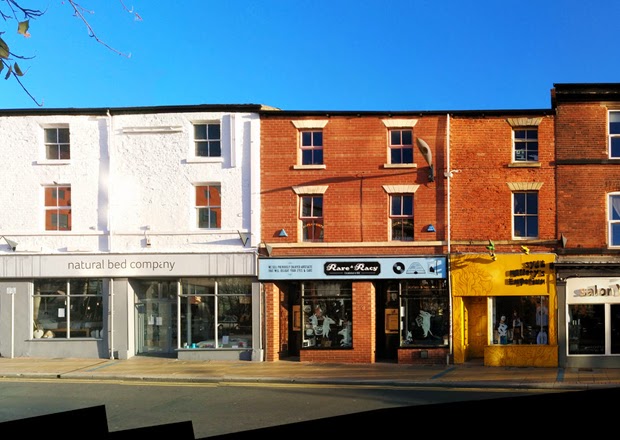
Devonshire Street Demolition – Approved.


Many people will now be aware that the proposed demolition of numbers 62 – 70 Devonshire Street was approved by the City Council's Planning Committee today. Some will be worried that this is the end of an era for independent shops on Devonshire Street. I hope to show you that this is not necessarily the case.


Round one of the fight is over, round two is about to begin. The heritage groups involved in objecting to this proposal have made it clear that, if they can raise the funds, they will challenge this decision through the full extent of the planning process. This is hugely important because if today has proved one thing it is that there is a hole in the planning provisions of this city that you could drive a coach and horses through.

The way that planning officers today interpreted the provisions of the National Planning Policy Framework (the National laws that govern planning processes) means that developers are now free to do almost anything they want, to any building in Sheffield, heritage asset or not, and the City Council is unlikely to oppose them through fear of litigation. The decision made today about the demolition of Devonshire Street sets a precedent that means almost any protection offered by the NPPF guidelines can be watered down so to prevent developers from threatening to challenge negative decisions.


Today's decision was a matter of balance. The planning officer admitted as much, the Councillors on the committee were made aware of that fact and we, as objectors tried to make it clear to them that this meant they did have a real choice. This was not a matter of the committee being unable to legitimately deny the application, it was a case of whether the committee was prepared to accept the potential of a challenge as the price of doing the right thing. They were not, at least not enough of them were.

The reason that this has arisen lays directly at the door of the City Council. Sheffield last legitimised it's planning guidelines in 1998 when it developed what is termed the Unitary Development Plan. This gave planners and developers details of what was and was not allowed within the city when it came to new development, demolition and other planning issues. This UDP has been amended by various other plans since. Specific plans for different quarters of the city, the city centre living strategy, guidance on the night time economy and others. The main provisions however have never been reviewed. Other overall development plans for the city have been developed and discussed but none have been adopted.


The UDP is now so old that the city's own planning department will no longer rely on it to protect the city or it's heritage from the ravages of profit hungry developers.


It's restrictions and guidelines are considered out of date and therefore almost irrelevant to the planning process. How can we expect planning officers to make the reasonable and robust decisions we need when their guidelines are almost non existent. This needs addressing and addressing soon before even more of the city's heritage is, as one Committee member commented this afternoon, “...slowly nibbled away piece by piece...”. With one notable exception the Labour ranks in the Planning Committee seem ill prepared to stand up for the city and the people that elected them.

Round one is over, round two is just beginning and a whole new battle is looming on the horizon. Is Sheffield up to the challenge?

Wednesday, 18 March 2015

Devonshire Street demolition. How to stop it!


The decision on the demolition of a row of shops considered by many as the jewel in the crown of the Devonshire Quarter's shopping experience and probably the oldest remaining shopping street in Sheffield will be made on Tuesday 24th March 2015, at the Planning Meeting, taking place in the Town Hall, Pinstone Street, S1 1HH at 2pm.

This may well be the last chance to prevent the demolition from going ahead, though with Planning Officers recommending demolition to the Planning Committee this may be a slim chance. I believe it is important that we make our case and try to force a rethink on the Officers and the Committee.

If you feel strongly enough about this and like me think this is unacceptable, get involved, here is what to do.


First, turn up to the Planning Meeting on Tuesday to voice your objection. You need to arrive fifteen minutes before the meeting starts, so at 1.45pm and register your wish to comment with the clerk of the meeting. Anyone affected by an application, whether as a neighbour or other Interested parties, may ask to put views personally.

Have your comments prepared. The more people that speak the longer the meeting will take and the potential that we can stop or change the decision that day. The Chair of the meeting will probably try to prevent too many people from contributing so we will have to be firm that we each have different points to make and we all deserve a chance to speak.

Make sure as much of your comment as possible concentrates on the planning issues rather than just personal preference for the shops that are currently there or concern over chain retailers taking over, they won't consider these comments as relevant. Make it personal however, commenting why you have problems with what they are doing, based on the planning issues.


Here are some comments that might be useful to you;

The Coal Authority report suggests a significant mining legacy risk. This could lead to redevelopment not being an option after demolition and this heritage being permanently lost.

The developer's own archaeological report states. “...overall, the proposed development will have a minor negative impact” and “A proposed sympathetic scheme that would retain the existing building, whilst also developing the land to the rear would be considered as providing a moderate/minor positive impact.”

The Planning Officer's report highlights “ Policy BE15 of the UDP...(says)...Development which would harm the character or appearance of Listed Buildings, Conservation Areas or Areas of Special Character will not be permitted.” (The Grade II listed former Wharncliffe Fireclay Works would be affected.)

and “... policy BE18...expects the retention of buildings, walls, trees, open spaces and other features that contribute to the character of the Area,”

and “Policy BE20 of the UDP (Other Historic Buildings) states that the retention of historic buildings which are of local interest but not listed will be encouraged wherever practicable”

The NPPF (National Planning Policy Framework) advises. “advises that local planning authorities should set out ... a positive strategy for the conservation and enjoyment of the historic environment and, ... recognise that heritage assets are an irreplaceable resource which should be conserved in a manner appropriate to their significance.

The Archaeological report also states. “Numbers 162-170 Devonshire Street have a strong social value, not only for those who continue to work within the buildings, but also within the wider local community. The social value of the application site has been demonstrated by public interest into the development proposal and formal comments registered to the application.”

and “The Appraisal concludes that the proposed development will result in the complete loss of the undesignated heritage asset of local importance...”


These are just a few comments I've picked out from all the reports as relevant to planning policy and therefore a good hook on which to hang your objections. There are others and all the reports can be seen on the Council website's Planning pages.

Start Here
http://publicaccess.sheffield.gov.uk/online-applications/files/0E3B859EE4C653ADD25BA09F6635DB17/14_03473_FUL--872262.rtf

The full set of reports are here.
http://publicaccess.sheffield.gov.uk/online-applications/applicationDetails.do?activeTab=documents&keyVal=NC1WIKNYFY000

If you have the time add some thoughts of your own.

Around 19,500 people have objected to this proposal, in one form or another, if we can get just 1% to turn up at the planning meeting that would be huge. Please try to be there and please try to comment.

Devonshire Street Demolition is Going Ahead

(image from Star article - http://www.thestar.co.uk/news/arctic-monkeys-drummer-backs-fight-to-save-sheffield-shops-1-6892207)


Time for bad news folks. Please share far and wide.

The planning meeting to decide the fate of the Devonshire Street parade of shops that include Rare & Racy is to happen at the Planning and Highways Committee Meeting, Tuesday 24 March 2015, 2.00 pm, at the Town Hall. Pinstone Street, Sheffield, S1 2HH

The agenda for the meeting is here
http://sheffielddemocracy.moderngov.co.uk/ieListDocuments.aspx?CId=373&MId=5604

The bad news is that planning officers are recommending demolition, despite objections from some 19,500 people, including the local MP Paul Blomfield, and local Green Councillor Jillian Creasy. Objections from Hallamshire Historic Buildings, Sheffield Civic Trust and even the developers own Archaeological report.

If you, like me, think this is unacceptable, you can still have your say. You have to turn up at the meeting and register beforehand to comment to the committee direct. If enough people can do this it is possible we could essentially filibuster the meeting. Prepare a comment make it relevant to planning issues and you should be able to speak.

Register to comment by sending your details to  martyn.riley@sheffield.gov.uk

It may not work but it has to be worth a try. It is time to do our bit. I will try to give you a foretaste of my comments in case you need some help but the main thing is to turn up and have your say.

The report draft is available here (will open as a document).
http://publicaccess.sheffield.gov.uk/online-applications/files/0E3B859EE4C653ADD25BA09F6635DB17/14_03473_FUL--872262.rtf

Sunday, 14 December 2014

Not My Sunday Sermon 4 – Winning & Losing, by Nigel Slack


This is a bit of a late night piece and a reflection on the fruits of three months of intensive campaigning. Campaigning both for change, through my work on transparency in Sheffield's public affairs, and for the support of that work through my crowdfunding project.


It's not a long piece because, in the scheme of things, three months is not a lot of time to make an impact on the political stage, but when trying to live on next to no income and extending credit to the limit, three months seems like forever. I guess that's why I've titled it 'Winning & Losing' the impact I've achieved in political terms has definitely been a win, my ability to make this my full time employ however, has failed.

In this aspect I am undoubtedly disappointed, deeply so. I have received support from some amazing people and, perhaps not surprisingly, those who have contributed could be considered those least able, financially, to do so. Those people have my undying and immense gratitude. They are people who understand what I have been trying to achieve, understand why it is important to do it and believed in my ability to deliver the goods. At least, in that, I feel vindicated in attempting the difficult sell, asking people to contribute to a project that gave no profitable return and no new gadget to display as evidence of ones tech savvy or fashion forward knowledge.

I admit to having failed to translate that into a mass appeal. Quite simply not enough people saw or understood what I was trying to do. Those that I did connect with and who took the time to look at what I was doing and listened to the things I managed to do, be they public or press, were able to relate to my concerns over the way decisions in our city are made and the lack of real public engagement in that process. A great deal of support was expressed and appreciation offered but the ability to fund it was often not there. It is there that the root of my disappointment lies.


Then there are the winning aspects of my last three months. The top of this list may surprise some people but it is the connections I have made with people, both inside local politics and more importantly outside, that share my belief that we can do better. Whether it's been professors from Universities or a 'Doley from Richmond' as he likes to call himself, Council Officers or 'some' Councillors, there are people throughout this city that realise we need to take a long hard look at how we arrange our politics for the future. That the involvement of the public and their support is the only way to legitimise a system that can get fewer and fewer people to the actual ballot box.

Then there are the little victories that come from constant conversations with the cities decision makers. Commitments to transparency in the planning process, the regreening of the Meadowhead roundabout and to opposing TTIP whilst it allows for the privatisation of the NHS.


The one achievement that will probably have the biggest impact on the transparency of decision making in the city is the latest. Live on Radio Sheffield, Leader of the Council, Julie Dore agreed to support the introduction of Webcasting for council meetings, if it can be done without impacting the city's budget. Why is this such good news? I've already put such a plan to the city's Commercial Director, who sees it as entirely feasible. The political will now matches the public appetite and there should be no more obstacles. Now that is a win worth talking about.

Wednesday, 10 December 2014

Sheffield Executive Board Meeting of 10th December 2014, by Nigel Slack.


“Devolution but not as we want it” might have been the subtitle of the first session of the meeting today, as the Board were given the opportunity to discuss local devolution and what it might look like.


The session was opened by Sharon Squires (Director, Sheffield First) who gave a brief comment on the 'English' model of devolution being promoted by the government. That is to say, regions (and at the moment it seems to be available only to City Regions) must ask for the devolution of specific powers. Westminster will then consider this, the Regions ability to prove they are able to provide the devolved policy delivery, and may agree the deal on powers based on targets and outcomes. This is known as 'Functional' devolution.

The other forms of devolution not generally available in England but already granted to Scotland and in some measure Wales are 'Fiscal', concerning the devolving of monetary and tax powers and 'Constitutional' concerning the devolving of governance and accountability. She was then hoping to discuss what might be the 'ask' from Sheffield as a city and the City Region by extension. This generated some discussion but it became clear that most members were struggling to start to visualise what may be possible.

Speculation then arose as to what might be on offer in the current deal being thrashed out by the Cabinet Office and the City Region. It seems likely that the Manchester deal will be a good starting point and that the areas on offer may well be Transport Infrastructure, Planning, Housing & Public Assets, Business Support and Skills & Training. This illustrates that the deal on offer is about the Regional Economic Geography and promoting economic growth rather than anything else.


There was some support for this approach from the private enterprise side of the membership, commenting that economic growth should be the focus for devolution and improving economic performance would be the result. Professor Gordon Dabinett (Regional Studies, Sheffield University) commented that in many European cities economic performance was improved not just through functional devolution but was further enhanced through a tie in to fiscal devolution. He also commented that without constitutional change it is just a rebalancing of economic power.

Julie Dore (City Council Leader) added that to improve the city's economic performance also needed the devolution of investment powers so the local area could define their investment priorities rather than government. There was also discussion about the redistributive approach of current local government funding and concern was expressed about how devolution would affect this. Gordon Dabinett commented that the implementation of progressive regional policies produced an economic benefit. In other words redistribution of wealth to the regions is better for all not just the regions.

A problem highlighted however was the fact that the redistribution formula is not transparent, accountable or understood. As a result it was difficult to assess alternatives or the impact of minor changes to such a complex system's outcomes. This might be illustrated by the current reductions in funding being imposed on many of the poorest areas of the country whilst some wealthy Counties are receiving increasing levels of funding.


This was followed by a suggestion from one member that we should perhaps only ask for the things we need from devolution rather than an extensive wish list. Gordon Dabinett suggested that evidence indicated devolution fails where the ambitions of devolution weren't big enough. James Henderson (Sheffield City Council, Director of Policy, Performance and Communications) suggested that we might consider the 'outcomes' we wanted as a city and then look at the levers we need to achieve that, as a way of determining the devolution we need. Devolution on 'Sheffield's' terms.

Julie Dore commented that we need to connect devolution to what people want, that it's not all about money but about decision making powers as well. This seemed, for me, to highlight the basic differences in the room between those that see devolution as being entirely about economic development, which the likely current deal is and those who want devolution to be about more than that. Gordon Dabinett commented that the deal as proposed is not a 'settlement' (backed by legislation) and therefore not devolution. He also suggested that devolution will only become real when attitudes within Whitehall (Civil Service) change in favour.


This whole conversation illustrates, for me, the lie of the current debate around devolution for England's regions. Central Government, whether politicians or civil servants, are not serious about the real devolution of the full range of powers (economic, fiscal, and constitutional) but are only interested in passing out specific functions in policy areas that they can continue to target and control through funding whilst grandstanding for party political purposes. They also see the opportunity to devolve contentious policies, like the previously devolved 'bedroom tax' responsibilities and the potentially explosive 'workfare' programmes in the current Manchester deal.

The City Council, the City Region and the city's influential leaders, represented at this meeting, need to be clear about this and be open with the public about it too. The public have been told that the government are driving this process and their need for a decision by the Autumn Statement on December 3rd meant we had no opportunity for a consultation period. This announcement did not materialise and the indications are the decision is now targeted at pre-Christmas but is stalled on Whitehall demands for a Metro Mayor and the City Region being unwilling to accept that. I guess we'll just have to wait and see who blinks first.


For me and, I know from the comments I get, the public are completely unimpressed by the whole affair, the secrecy of the negotiations and the lack of consent from the electorate. This so called devolution solution is simply not good enough.

Saturday, 6 December 2014

Sheffield City Full Council Meeting of 3rd December 2014, by Nigel Slack.


The Lord mayor kicked off the meeting with the usual preamble but there were then a couple of announcements. Firstly it was announced that part of today's meeting would be audio recorded, by Kier as a test. The reason for the test is not made clear but hopefully it is part of the response to my ongoing attempts to get meetings recorded and webcast.


Further announcements were, a collection to take place in support of the Archer Project (homeless) and that the Women of Steel statue appeal had reached it's target. Great news. Lastly Cllr Julie Dore (Leader) announced the appointment of Cllr Jayne Dunn as the new cabinet member for Environment, Recycling & Streetscene. She replaces Cllr Jack Scott who seems to have left under a bit of a cloud in relation to the current recycling centre dispute.

After approving the minutes (a question over this will be in my Cabinet Questions in a couple of weeks) the meting moved on to petitions and public questions. There were two petitions this weeki, one relating to road safety on Sharrow Vale Road and one about access problems on a road with a wide central grass verge.

Then came questions one expressing concern over the consultation exercise about the changes to Chesterfield Road at Heeley, another about the Council's response times for complaints and one about the proposed changes to the road plan around Heeley City Farm and the suggested removal of many mature trees to make way for a bus lane.


My questions were up next. My first was a continuation of my attempts to find out what is happening on the City Region deal misleadingly labelled 'devolution'. The answer from Cllr Julie Dore (Leader) basically confirmed that the supposed deadline of the Autumn Statement for an announcement of a deal had been missed, heads of terms had not yet been agreed, and that as soon as the Council know what's happening, the public will know.

Audio below.

My second question asked about the governments commitment to the 'Northern Powerhouse' idea, in light of the announcement of the new Garden City based around Bicester in Oxfordshire, within commuting distance of the capital. Julie Dore responded that she understood the Garden City proposal was about housing mainly and that she hoped the government would still continue to invest in the economic future of the Northern cities.

Audio below.

Finally I asked about the Council supporting the call for a minimum wage of £10/Hour for the UK based on the successful campaign in Seattle USA to introduce a minimum wage of $15. It should be noted that this is already Green Party policy. The basis of the idea being both a reduction of in-work benefit costs and an increase in local economic activity as most low paid workers spent any pay increases in the local economy. Julie Dore again responded. She said she needed to see more evidence on the figure that was being chosen by the Unions to support this and to think about the general economic situation in terms of affordability but that in general she was minded to support the idea.

Audio below.

Unfortunately I was unable to stay for any more of the meeting but will be following up on the recording test that was carried out to see why it was undertaken and the result.

Tuesday, 2 December 2014

Overview & Scrutiny Management Committee Meeting of 26th November 2014, by Nigel Slack.


This committee is responsible for keeping a watchful eye on the work programmes of the Council's scrutiny committees. It also has overview of city wide matters that cut across other committee boundaries.


After the usual housekeeping announcements and approval of minutes, the meeting moved straight to Public Questions. I had put a question about the review of the Locality Management arrangements and their scrutiny but was asked by the Chair, Cllr Chris Weldon (Labour) if it could be passed to the next days Safer & Stronger Communities Scrutiny meeting, which was more appropriate as they were to receive a report on same. I agreed.

The only other question was from Alan Kewley. He first expressed concern over the time taken to respond, in writing to questions when that was promised. His response to the questions asked at the previous months meeting had arrived in his e-mail that very morning and he had no time to digest the response nor disseminate it before today's meeting. He then went on to discuss how it might be possible to increase public involvement in these meetings and with more and more Council's now webcasting their meetings what the potential was for this in Sheffield?

The Chair's response was that there had been lots of changes over the last few years that had improved peoples involvement in council matters and that webcasting had been considered in the past. He promised a written answer from officers, that would come to the board for their consideration. Cllr Ian Auckland (Lib/Dem) asked that the responses be available within ten days. The Chairs agreed this should be so.


The main item of interest on the rest of the agenda was a report on the Boundary Commission review of the ward boundaries for the council. This was given by James Henderson and Victoria Penman.

They recapped the position so far. The commission had considered the size (number of councillors) of the council and agreed to keep that at 84, in 28 three councillor wards. This stage of the commissions proceedings was consultation about the actual ward boundaries. This is a complex decision and the Boundary Commission report is available here. The main problem however was to cut the size of the Central Ward which had 148% of the number of electors it was supposed to have. The consequence of this is that the Commission has radically shifted many residents into neighbouring wards and the ripples move outwards to a lesser degree.

There were eight public comments in this item, six from residents in Highfield who were unhappy about the splitting of the community into two different wards and two from Bradway who were upset that the same thing had happened to Bradway last time around and had not been corrected this time.


There were also comments from the members of the committee about Highfield and who had made this decision. James Henderson said it was a result of the decision about Council size. The Council elects by thirds and this meant that all wards had to have three councillors. A proposal by officers to split the Central ward in two each with two councillors was therefore not feasible despite the fact it was the best solution to future proof the ward against new development that was in the offing.

Cllr Sarah Jane Smalley (Green) commented that she understood there had been consideration of a proposal to split Gleedless from Arbouthorne and that this would have balanced the numbers but it was unpopular with Councillors in that area. Cllr Pat Midgley (Labour) suggested that boundary changes settle down over time and few people now remember the defunct Castle ward.

Cllr Jillian Creasey (Green) commented that the Council still needed to make strong submissions to the commission as they are a powerful consultee and their comments would be crucial. Finally Cllr Bryan Lodge (Labour) wanted to clarify for the record that this was a commission proposal and not the City Council's.


The Chair then summarised that this was the second consultation by the commission and that all public comments today would be included in the Council's submission. He also asked officers to meet with the Highfield community and relevant Councillors to get further comments.

The rest of the agenda was quickly despatched and the meeting dispersed.